
We are a group of scholars of American politics and comparative politics who have come together to examine the state of democracy in the United States today. Political scientists have been concerned for some time about trends that weaken American democracy, including rising economic inequality, growing polarization, resurgent racism or nativism, and escalating executive power. Before the 2016 election of a candidate who openly flouted democratic norms, however, few worried seriously, however, about the prospect of severe deterioration of democracy, never mind regime change. Since then, however, the country has experienced a violent attack on the US Capital that aimed to interfere with the certification of the 2020 election results and in 2024 reelected the president who instigated it. The United States is now experiencing an unprecedented and dangerous confluence of the threats to democracy and the future of American democracy lies in the balance.
We aim to integrate insights from previous crises in American history when democracy was threatened with the prospect of instability or backsliding, with the understanding of similar circumstances in nations around the world. No other working group on democracy combines these disciplinary perspectives–drawing equally on insights from the study of comparative politics and American political development and US institutions. We foster discussion and writing around these topics, seeking to understand sources of democratic vulnerability and resilience, as well as how to strengthen democracy. We organize events and provide materials that are useful for instructors, journalists, and citizens.
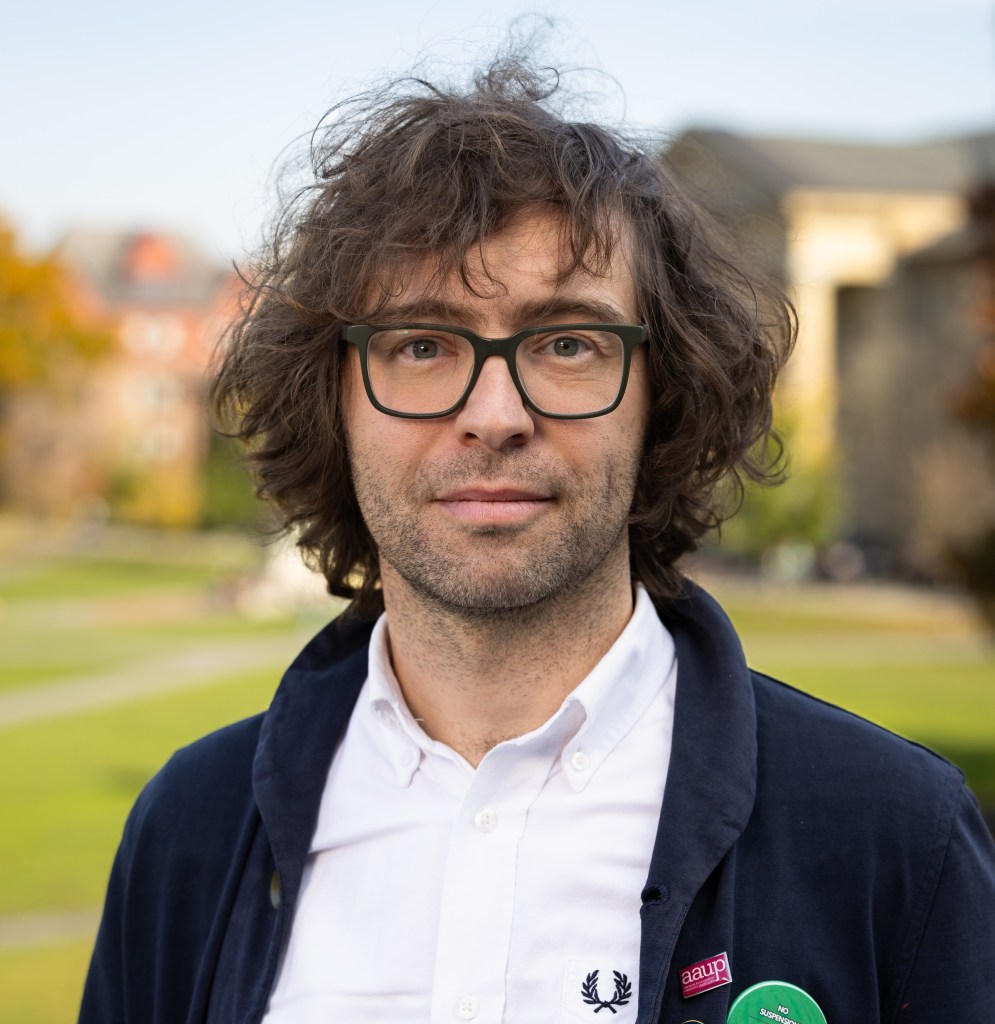
David Bateman is an associate professor in the Government Department and in the Jeb E. Brooks School of Public Policy at Cornell University. He is the author and co-author of two books – Disenfranchising Democracy: Constructing the Electorate in the United States, the United Kingdom, and France and Southern Nation: Congress and White Supremacy after Reconstruction – and the co-editor of a collection of essays, When the People Rule: Popular Sovereignty in Theory and Practice. His research focuses on democratic (and undemocratic) institutions, ideologies, and theory, including legislatures, voting rights, representation, race and racism, and the relationship between democracy and diversity.
▽ Recent relevant publications (click to expand):
Bateman, D. A. (Forthcoming). Democratization in the USA? The Impact of Antebellum Suffrage Qualifications on Politics and Policy. The Journal of Politics.
Bateman, D. A. (2025). Democracy-Reinforcing Hardball: Can Breaking Democratic Norms Preserve Democratic Values?. Comparative Political Studies.
Bateman, D. A., Lieberman, R., & Childree, A. (forthcoming). Election administration and democratic fragility. In Bunce, V. J., Pepinsky, T. B., Riedl, R. B., & Roberts, K. M. (Eds.), Global challenges to democracy. Cambridge University Press.
Bateman, D., Grumbach, J., & Thurston, C. (2023). Race and historical political economy. In J. A. Jenkins & J. Rubin (Eds.), The Oxford handbook of historical political economy. New York: Oxford University Press.

Robert C. Lieberman is Krieger-Eisenhower Professor of Political Science at Johns Hopkins University. He is the author of numerous books and articles on American political development, race and politics, and American democracy, including most recently Four Threats: The Recurring Crises of American Democracy (with Suzanne Mettler).
▽ Recent relevant publications:
King, D., & Lieberman, R. C. (2021). “The Latter-Day General Grant”: Forceful Federal Power and Civil Rights. Journal of Race, Ethnicity, and Politics, 6(3), 529-564.
Lieberman, R. C. (2022). Can Social Movements Save American Democracy? A Review Essay. Political Science Quarterly.
Lieberman, R. C., & Mettler, S. (2023). The Crisis of American Democracy in Historical Context. The ANNALS of the American Academy of Political and Social Science, 708(1), 122-136.
Lieberman, R. C. (2024). Compared to what?: Setting American political development in comparative context. Social Science History, 48(2), 361-382.
Lieberman, R. C., & Gaines, K. J. (2024). Courts, the state, and democratization in the United States. Law & Policy.
Lieberman, R. C., & Schlozman, D. (2024). Democratic Backsliding and Ethnic Politics: The Republican Party in the United States. Comparative Political Studies, 00104140241302714.
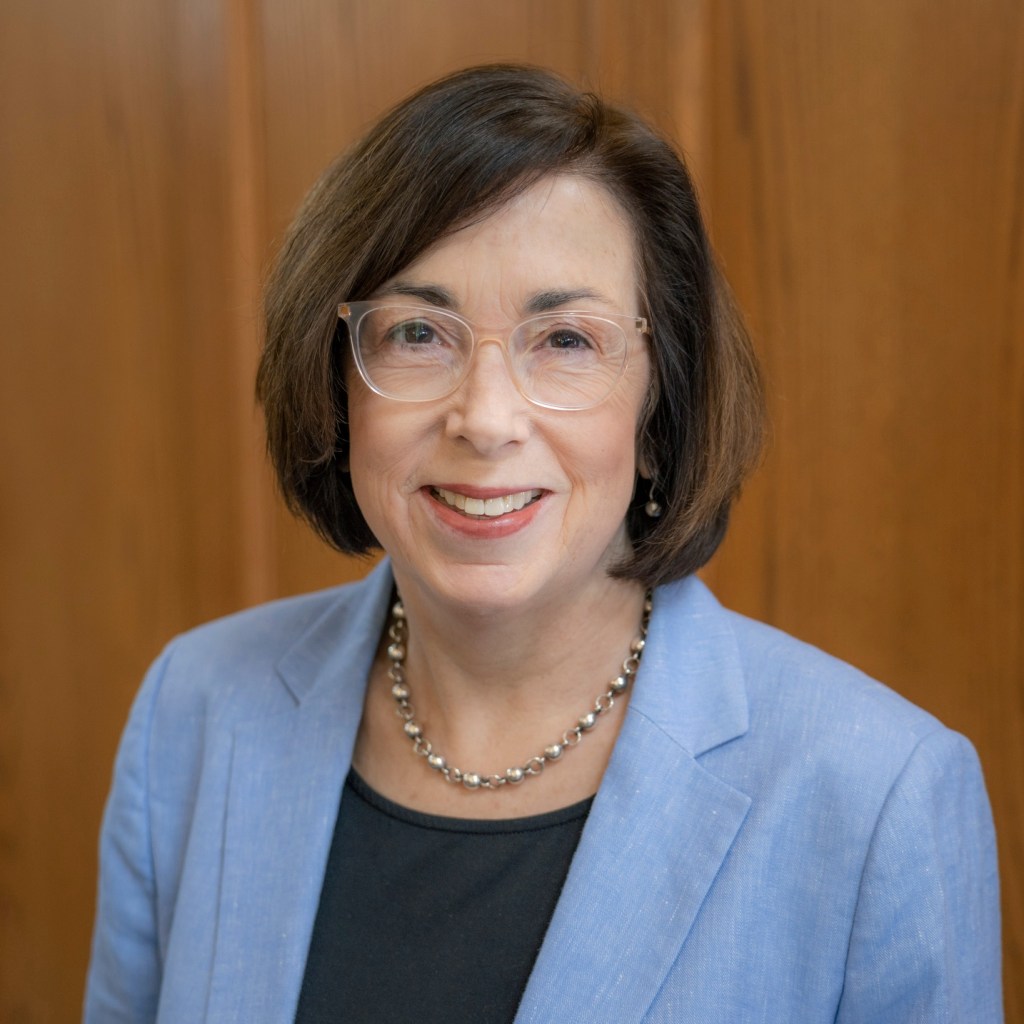
Suzanne Mettler is the John L. Senior Professor of American Institutions in the Government Department at Cornell University. Her most recent book is Four Threats: The Recurring Crises of American Democracy (with Robert C. Lieberman). Her new book on the rural-urban divide, with Trevor Brown, is due out in late 2025.
▽ Recent relevant publications:
Brown, T. E., Jauregui, G. P., Mettler, S., & Rivera, M. (2024). A rural-urban political divide among whom? Race, ethnicity, and political behavior across place. Politics, Groups, and Identities, 1-14.
Brown, T. E., & Mettler, S. (2024). Sequential Polarization: The Development of the Rural-Urban Political Divide, 1976–2020. Perspectives on Politics, 22(3), 630-658.
Mettler, S., Jacobs, L. R., & Zhu, L. (2023). Policy threat, partisanship, and the case of the Affordable Care Act. American Political Science Review, 117(1), 296-310.
Mettler, S., & Brown, T. (2022). The growing rural-urban political divide and democratic vulnerability. The ANNALS of the American Academy of Political and Social Science, 699(1), 130-142.
Brown, T., Mettler, S., & Puzzi, S. (2021). When Rural and Urban Become “Us” versus “Them”: How a Growing Divide is Reshaping American Politics. The Forum, 19(3), 365-393.
Jacobs, L. R., Mettler, S., & Zhu, L. (2022). The pathways of policy feedback: How health reform influences political efficacy and participation. Policy Studies Journal, 50(3), 483-506.

Jamila Michener is an associate professor of Government and Public Policy at Cornell University. She studies poverty, racial inequality, and public policy, with a particular focus on health and housing. She is author of the award-winning book, Fragmented Democracy: Medicaid, Federalism, and Unequal Politics, co-editor of Politics in the American States: A Comparative Analysis, and co-author of Uncivil Democracy: Power, Politics, and Access to Justice (Princeton University Press, forthcoming).
▽ Recent relevant publications:
Grumbach, J. M., & Michener, J. (2022). American Federalism, Political Inequality, and Democratic Erosion. The ANNALS of the American Academy of Political and Social Science, 699(1), 143-155.
Michener, J. (2023). Entrenching inequity, eroding democracy: State preemption of local housing policy. Journal of Health Politics, Policy and Law, 48(2), 157-185.
Michener, J. (2022). Civil Justice, Local Organizations, and Democracy. Columbia Law Review, 122(5), 1389-1422.
Michener, J. (Forthcoming). Uncivil Democracy. Princeton University Press.

Tom Pepinsky is the Walter F. LaFeber Professor of Government and Public Policy at Cornell and Nonresident Senior Fellow at the Brookings Institution. He is the author of several books and essays on comparative politics, political economy, and identity in Southeast Asia and beyond, including “Migrants, Minorities, and Populism in Southeast Asia” (Pacific Affairs), “Demographic “Structure and Voting Behaviour during Democratization” (Democratization), and “Voting in Authoritarian Elections” (American Political Science Review, to appear).
▽ Recent relevant publications:
Isiksel, T., & Pepinsky, T. (forthcoming). Voting in Authoritarian Elections. American Political Science Review.
Gadarian, S. K., Goodman, S. W., & Pepinsky, T. B. (2024). Trump Support Explains COVID-19 Health Behaviors in the United States. Public Opinion Quarterly, 88(1), 161-174.
Gadarian, S. K., Pepinsky, T. B., & Goodman, S. W. (2022). Pandemic politics: the deadly toll of partisanship in the age of COVID.
Dettman, S., & Pepinsky, T. B. (2024). Demographic structure and voting behaviour during democratization: evidence from Malaysia’s 2022 election. Democratization, 31(1), 1-22.
Goodman, S. W., & Pepinsky, T. B. (2021). The exclusionary foundations of embedded liberalism. International Organization, 75(2), 411-439.
Pepinsky, T. (2020). Migrants, Minorities, and Populism in Southeast Asia.Pacific Affairs, 93(3), 593-610.

Ken Roberts is the Richard J. Schwartz Professor of Government at Cornell University, with a specialization in comparative and Latin American politics. His research explores the intersection of parties, populism, and social movements, with a focus on crises of democratic representation in different world regions. His most recent books, forthcoming in 2025, include Polarization and Democracy: Latin America After the Left Turn (University of Chicago Press, co-authored with Santiago Anria), and Global Challenges to Democracy: Comparative Perspectives on Backsliding, Autocracy, and Resiliency (Cambridge University Press, co-edited with Valerie J. Bunce, Thomas Pepinsky, and Rachel Beatty Riedl).
▽ Recent relevant publications:
Sarsfield, R., Moncagatta, P., & Roberts, K. M. (2024). Introduction: The new polarization in Latin America. In R. Sarsfield, P. Moncagatta, & K. M. Roberts (Eds.), The new polarization in Latin America: Sources, dynamics, and implications for democracy [Special issue]. Latin American Politics and Society, 66(2), 1–23.
Roberts, K. M. Structural and Institutional Sources of Populist Resiliency. In Still the Age of Populism? (pp. 32-47). Routledge.
Roberts, K. M. (2024). Structural and Institutional Sources of Populist Resiliency. In M. Bernhard, A. Kreppel, & C. de la Torre (Eds.), Still the Age of Populism? Routledge.
Bunce, V. J., Pepinsky, T. B., Riedl, R. B., & Roberts, K. M. (Eds.). (Forthcoming). Global Challenges to Democracy: Comparative Perspectives on Backsliding, Autocracy, and Resilience. Cambridge University Press.
Anria, S., and Roberts, K. (Forthcoming). Polarization and Democracy: Latin America after the Left Turn. University of Chicago Press.

Founding Member Rick Valelly is Claude C. Smith ’14 Professor of Political Science at Swarthmore College and a specialist in American political parties, national institutions, and public policy. His scholarship focuses on democratic development and enfranchisement in the U.S. His best known work is The Two Reconstructions: The Struggle for Black Enfranchisement (Chicago, 2004.)
 AMERICAN DEMOCRACY COLLABORATIVE